
Extreme Directors: Part II (Warning Graphic)
- Jan 21, 2015
- 4 min read
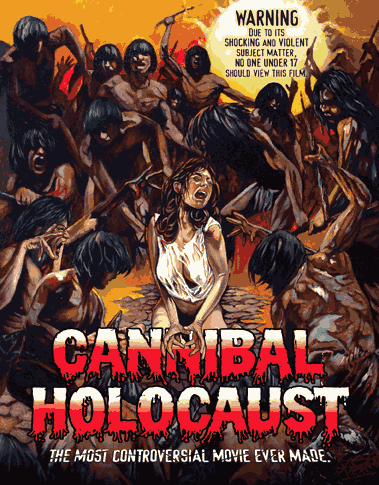
Last post we examined some of the most extreme measures directors have taken to see their vision come to life. If you didn’t read part I, you can easily jump in here. This post will feature an entirely different director. However, I do recommend that you check out part I afterwards.
So here it is, part II of EXTREME DIRECTING, as we examine the insane ways directors have directed their movies.
The First Found Footage Film

By now, the style of a found footage film is pretty well known. Many remember being introduced to the concept through some of the more modern films such as, Paranormal Activity, Cloverfield, REC, Chronicle, or classic The Blair Witch Project. But going back to the days of the 80s, we find one of the most violent and controversial films in cinema history, Cannibal Holocaust.
The film was directed by an Italian director, Ruggero Deodato, during a time when cannibals were as trendy as super heroes today. After the success of Jungle Holocaust, (another cannibal film directed by him) Deodato was contacted by producers to create a similar movie.
So together with his friend/producer, Francesco Palaggi, the two flew to Columbia, to the southernmost town of Leticia, which was chosen to be the location of the filming. This would later become an issue during production because the town was only accessible by aircraft, and to make matters worse, the set could only be reached by taking a boat from town. The climate also caused many delays with the numerous spontaneous storms and heat waves.
The idea for cannibal holocaust was heavily influenced by media coverage of the Red Brigade, a group of terrorists highly active at the time. In the words of Deodato, “It was the time of the Red Brigades. Every night on TV there were very strong images of people being killed or maimed. Not only killings but also some fabrications. They were increasing the sensationalism of the news just to shock people."
Deodato believed that much of the news coverage at the time purposefully depicted violence, and possibly went as far as to stage certain news angles for better footage. He wanted to reflect this behavior in his movie, using the film team that goes missing, as a symbol for the Italian media.

The movie tells the story of a missing film crew that left for the Amazon to document a tribe of cannibals. Bits of their footage are discovered, showing the true nature behind the film crew and their unethical ways of staging their shots and terrorizing the tribe. It stars, Gabriel Yorke, Francesca Ciardi, Perry Pirkanen, Luca Barbareschi, and Robert Kerman, one of the few to make the successful transition from porn star to actor.
All the actors were hired under contract that they would hide from the media for exactly one year, as a marketing ploy to encourage the rumor that they actually died during the filming. In fact, the obsession with realism was the sole drive of the film that started the documentary style of filming in the first place.
Ironically, the movie eventually drove Deodato and producers into behaving suspiciously similar to the film crew they were portraying, as they craved rawer, realistic violence.
"My producer in Italy was showing dailies in the film markets and getting an amazing response, so he was ringing me every day in the jungle telling me: 'Do more! Do more! Keep filming! Kill more people! Don't worry; your message will come though.”

Real live animals were slaughtered during the filming as a way to portray more realistic footage. This practice caused tension between the director and actors. Kerman and Deodato had frequent arguments and at one point, Kerman ran off set during the killing of a coatimundi. Perry Pirkanen broke into tears after the killing of a turtle and several of the films crew vomited off camera during the slaughter of a squirrel monkey.
Indigenous people from the real tribes of the Yanomami and Shamatari (named exactly as the names depicted in the film) were hired as the cannibals. Although neither tribe is depicted accurately, they both really do practice endocannibalism, which is consuming their dead fellow tribesmen. (But not nearly as dramatized as shown in the movie. ) Often during the filming, the natives were the most mistreated.
"He was a sadist. He was particularly sadistic to people that couldn't answer back, people that were Colombian, [and] people that were Italian but could be sent home" says Kerman.
Pay was sometimes much less than agreed upon or late. While the natives weren’t paid at all, despite their extremely risky scenes such as staying inside a burning hut.
Actress Francesca Ciardi also had a dispute with director Deodato about the film's sexual content, and felt uncomfortable about the sex scene with Yorke. Oddly enough, before shooting she had suggested actually having sex with Yorke off set to relieve the tension and feel more comfortable during the scene.
Despite the numerous issues, the film was finally completed and premiered on February 7, 1980 in the city of Milan. People went crazy. The film received a highly positive reaction, and even grossed $2 million dollars before it was seized.
It only took 10 days before the controversy started. The raw depictions of animal cruelty, sexual violence, and gore led many to believe a real snuff film had hit the market. Remember the contract that the actors were bound by? Their sudden disappearance didn’t help the credibility of the film, and many accusations were made that the actors had really been murdered. Deodato was arrested and being charged with obscenity and murder. He was facing possible life in prison.
To prove his innocence, Deodato was forced to void the contract and have the actors appear in court. The film was widely banned, because although Deodato had proved the people involved were still alive, the killings of animals had violated animal cruelty laws. Later Deodato released a statement with his regret for his actions. "I was stupid to introduce animals."
Cannibal Holocaust became notorious for one of the most gruesome films ever made, and it’s distinctive style of filming influenced the birth of the found footage genre today. But was it worth it? Deodato, years later, has expressed deep regret with making the film. In pursuit of portraying the media's obsession with violence all for shock value, Cannibal Holocaust isn't entirely different, even if the message was.


![6 Memorable Scares From Paranormal Activity [Series]](https://static.wixstatic.com/media/3efee9_796fe2c62ee74558bcca4ac9385b50f3.png/v1/fill/w_666,h_378,fp_0.50_0.50,lg_1,q_35,blur_30,enc_avif,quality_auto/3efee9_796fe2c62ee74558bcca4ac9385b50f3.png)
![6 Memorable Scares From Paranormal Activity [Series]](https://static.wixstatic.com/media/3efee9_796fe2c62ee74558bcca4ac9385b50f3.png/v1/fill/w_296,h_168,fp_0.50_0.50,q_95,enc_avif,quality_auto/3efee9_796fe2c62ee74558bcca4ac9385b50f3.png)


Comments